BEER CAN DESIGN

Case Study

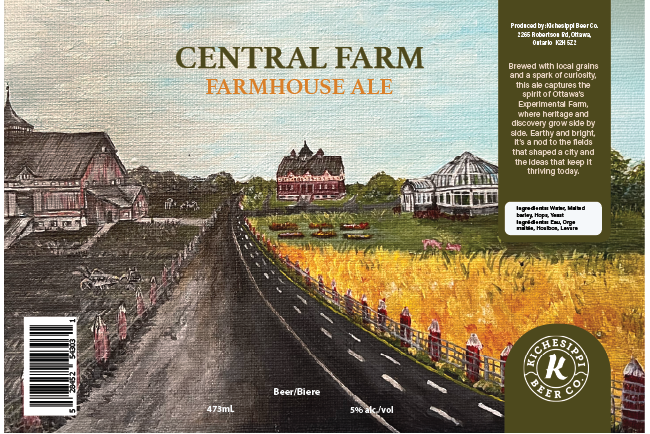
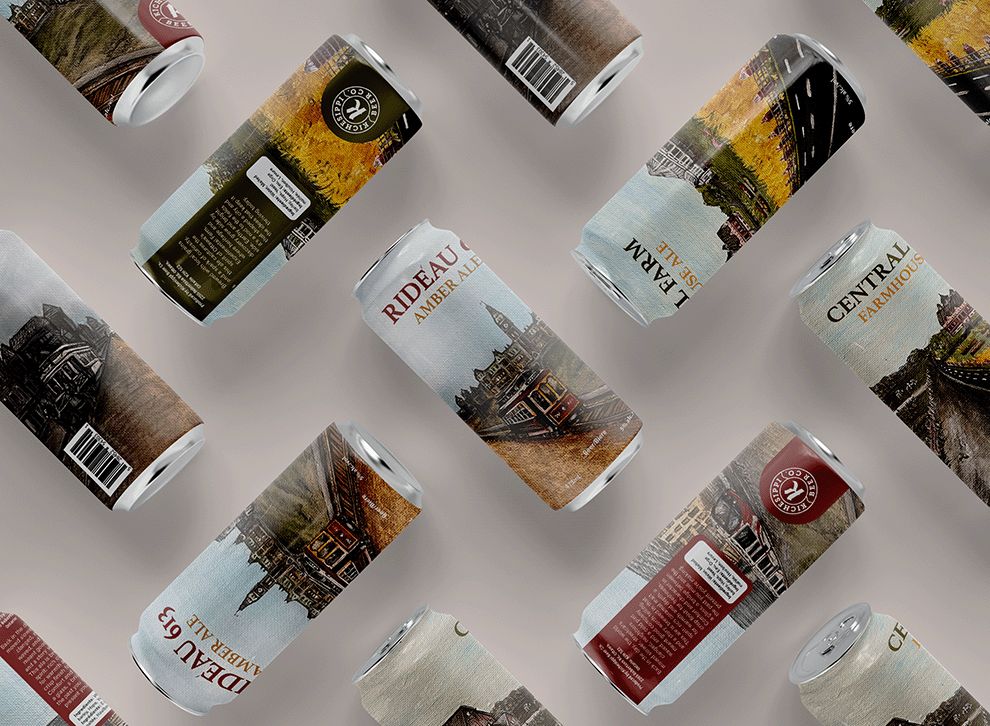
For this series, I created two custom beer can labels inspired by iconic moments and locations in Ottawa’s history. Each illustration began as a hand-painted artwork, later refined and converted into full label designs. The objective was to blend local storytelling with craft beer branding, giving each can a nostalgic, collectible feel while staying true to Kichesippi’s visual identity.

Emma Walton

App Design

The Challenge

Main Challenge

The challenge was to transform two original paintings into cohesive, shelf-ready beer can designs that both celebrate Ottawa’s history and align with Kichesippi’s existing brand identity. Each artwork needed to maintain its handmade, textured feel while still functioning as a clear, legible, and marketable label.

Key Goals

  • Create two distinct yet connected labels. One design highlights the Experimental Farm, while the other showcases OC Transpo through the decades — both rooted in local heritage but visually united under the Kichesippi brand.

  • Ensure readability and balance. Typography, colour hierarchy, and layout needed to complement the artwork without overpowering it.

  • Highlight Ottawa’s identity. Each label needed to immediately communicate a sense of place, history, and community, reflecting Kichesippi’s commitment to celebrating local stories.

Orange circle with a black checkmark inside
Yellow background with a black check mark inside a circle.
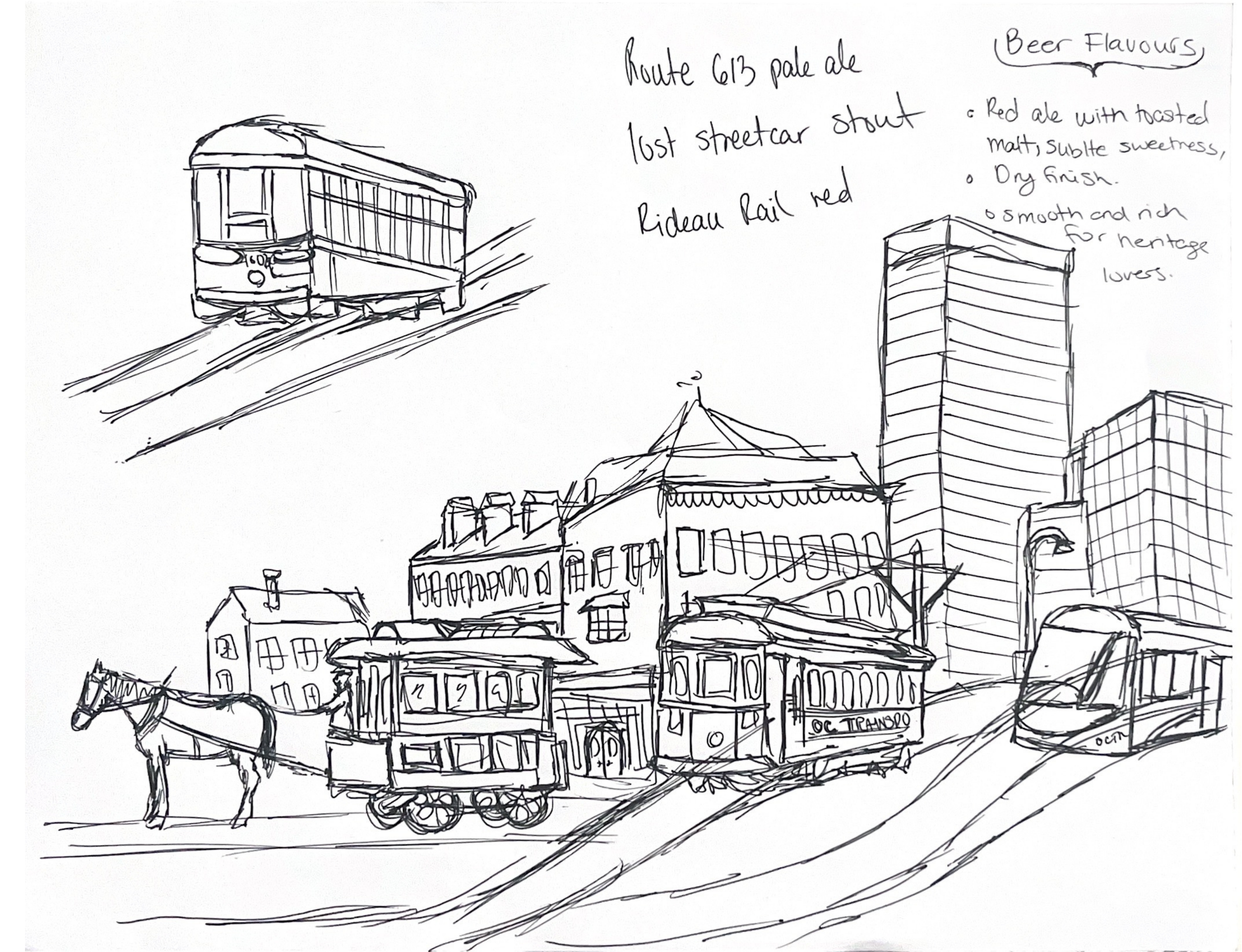
Sketch of a cityscape featuring a historic streetcar, modern tall buildings, and a horse-drawn carriage. Notes indicate a Route 613 pale ale and beer flavors.

Research

Before designing the final labels, I conducted contextual and visual research to ensure the artwork and layouts aligned with both the brewery’s identity and the historical subject matter.

1. Brand + Market Research

  • Reviewed Kichesippi’s existing can lineup to understand their typography, colour palettes, and placement of key information.

  • Analyzed competitive craft-beer packaging in Ottawa to identify trends in illustrative storytelling on cans.

  • Noted that illustration-driven labels often succeed when the artwork remains the hero, supported by clean typography.

2. Historical + Visual Research

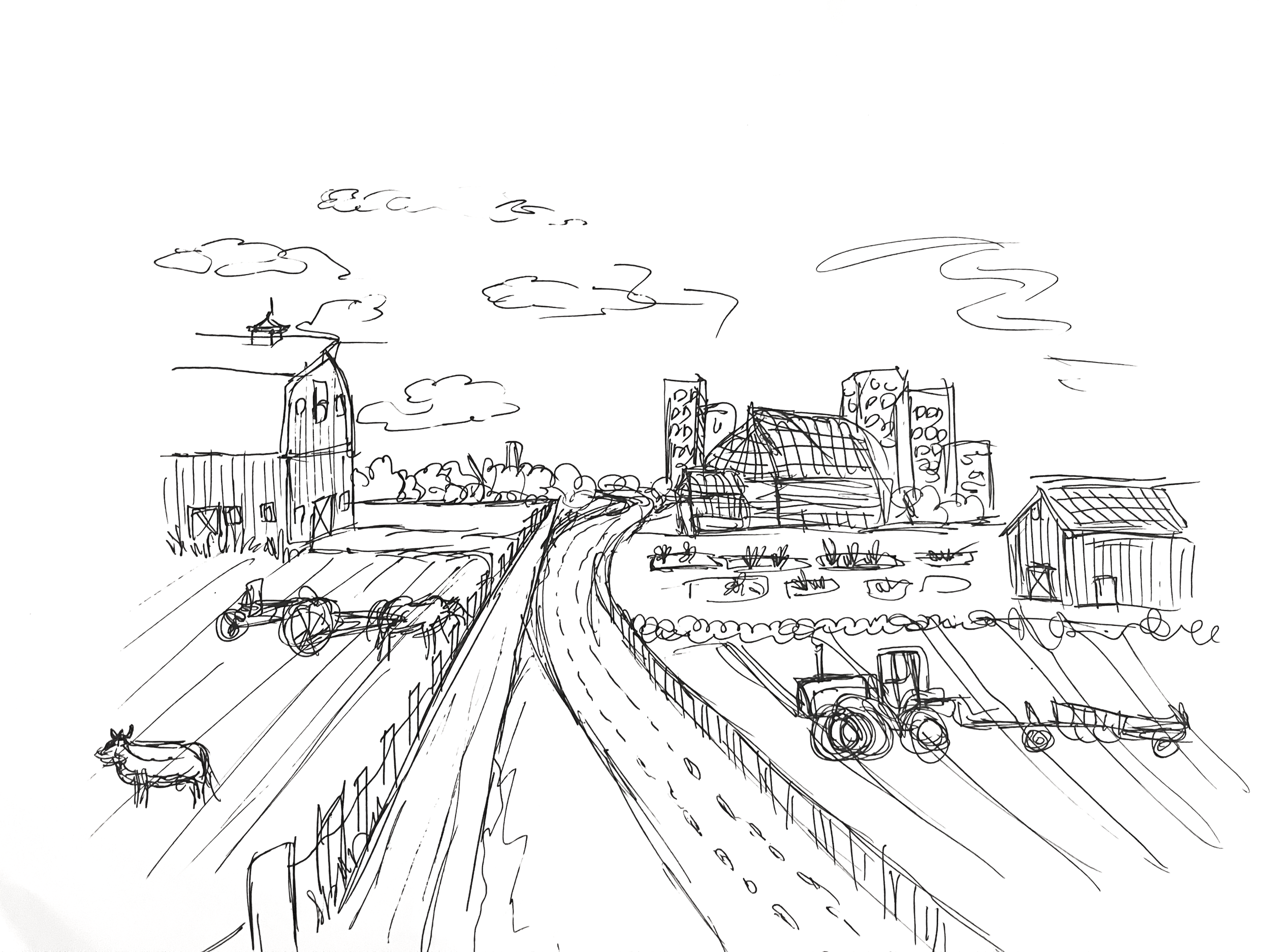
  • Studied archival photos of the Central Experimental Farm to accurately capture building structures, landscape, and the heritage style.

  • Looked at historical OC Transpo and streetcar imagery to ensure the transit illustration represented multiple eras authentically.

  • Gathered reference on old Ottawa street layouts, architecture, and atmospheric details like signage and surrounding buildings.

3. User/Viewers Insights

  • Many customers enjoy buying local products with strong ties to community identity.

  • Beer drinkers respond positively to cans that feel “collectible” or that tell a story—especially those featuring local art.

Historical farm scene with fields, buildings, trees, and cows in the foreground.
Black and white photo of a rural farm landscape with barns, silos, and fields.
A red streetcar traveling past a historic stone building with ornate architectural details.

The Solution

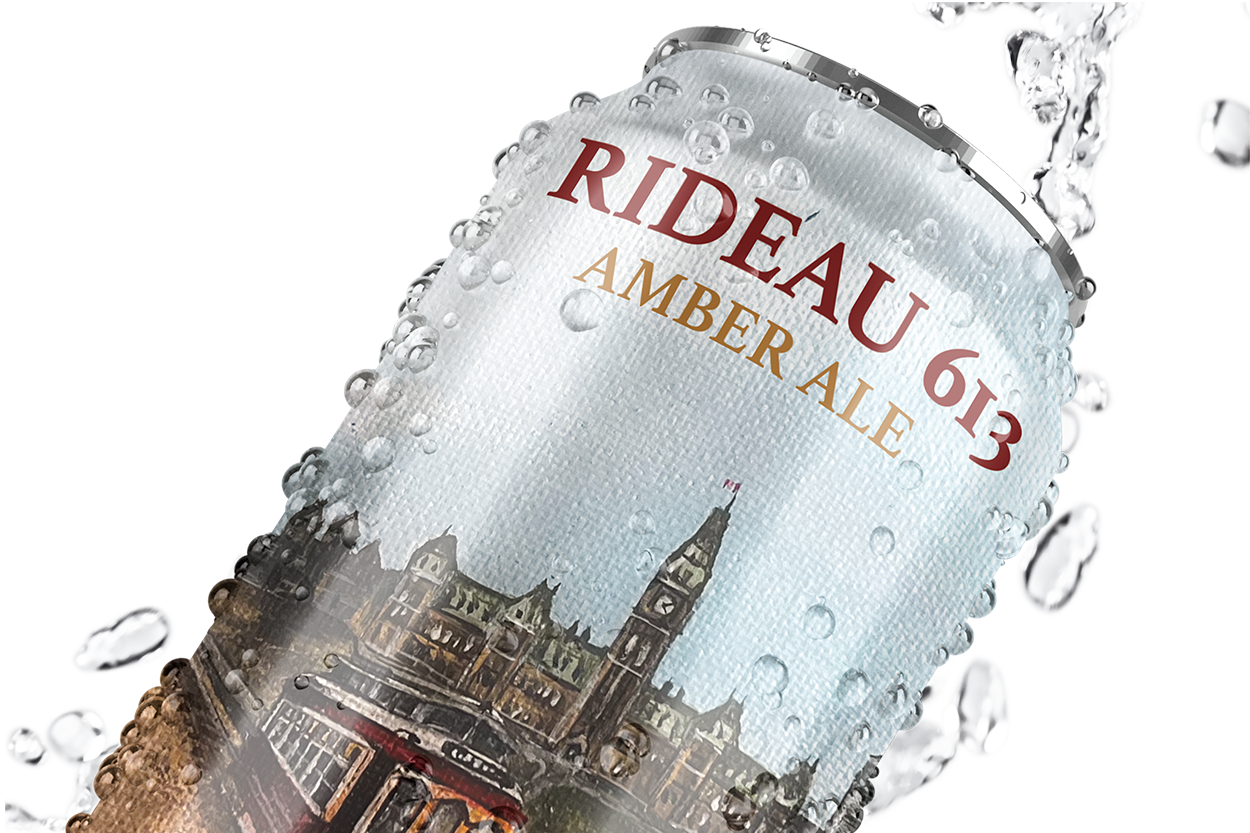
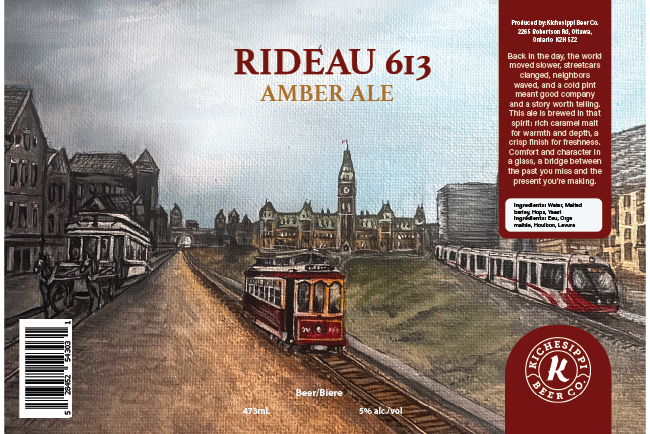
The solution was to create two illustrated beer can designs for Kichesippi that celebrate iconic Ottawa history. I transformed painted artworks of the Experimental Farm and OC Transpo through the decades into bold, wrap-around labels. By refining colour, composition, and texture, the illustrations became clean, production-ready graphics that stayed true to the original artworks while feeling fresh and collectible. The final labels give each beer a strong sense of place, connecting Kichesippi’s brand to local pride and recognizable city landmarks.

Illustration of a city street scene with two vintage trams, one red and one white with red accents, on tracks. In the background, there is a historic clock tower and old buildings, with a cloudy sky overhead. The image is part of a beer label for Rideau 613 Amber Ale from Kichesippi Beer Co.
Label for Central Farm Farmhouse Ale, featuring an illustration of a farm scene with a road, farm buildings, and a greenhouse, along with text describing the beer's ingredients and brewery details.